Water Quality
The Iowa Environmental Council has information at the link below focusing on recent research and action related to cancer. Iowa has the second-highest cancer rates in the nation, and it is among only two states where cancer rates are increasing. An estimated 21,200 new invasive cancers will be diagnosed among Iowans in 2025, according to the Iowa Cancer Registry’s annual “Cancer in Iowa” report. “We know that our environment and our health are inextricably linked,” says Sarah Green, Executive Director of the Iowa Environmental Council. “With so many Iowans’ lives touched by cancer, it’s important that we explore every link and find ways we can work together to mitigate all potential sources of risk and save lives.” Click below to learn more.
Cancer and Environmental Risk Factors in Iowa – Iowa Environmental Council
Plastic Free July

Plastic Free July is a global movement that helps millions of people be part of the solution to plastic pollution – so we can have cleaner streets, oceans, and beautiful communities. Will you be part of Plastic Free July by choosing to refuse single-use plastics? This checklist can help you get started:
Plastic Free July Action Picker Getting Started
Here are some ideas you will find on the checklist:
- Shop at the deli counter or butcher for meat or fish wrapped in paper.
- Put your loose fruits and veggies in reusable bags you’ve brought from home while shopping at the grocers.
- Bring a reusable cup to the coffee shop or sit and enjoy a real cup.
- Line your garbage bin with paper. For wet scraps, compost or freeze until bin day.
- Use a reusable lunch box, containers, or beeswax wrap for storing foods.
Energy Audit Information
Want to see how you can make your home more efficient? Green Iowa AmeriCorps is currently doing free energy audits in Polk, Dallas, and Jasper counties. We reached out to the staff, which is based out of the Center for Environmental Education at the University of Northern Iowa. They are operating and trying to do as many audits as they can before summer, so contact them soon if you are interested.
The information below is from their website:
“A Home Energy Audit is the first step in assessing how much energy a home consumes and evaluating what measures can be taken to make the home more efficient. These are always free to everyone and open to the public.
Through our energy audit process, we focus on the three C’s of weatherization: Cost, Comfort, and Conservation. Whether you’re interested in reducing utility costs, creating more comfortable living spaces, or conserving our natural resources, our weatherization services can help! Members of Green Iowa AmeriCorps undergo training and earn Building Analyst Professional certification from the Building Performance Institute (BPI). Armed with this training, our service teams assess a home’s efficiency, evaluates problem areas, and seeks potential solutions.”
Mow Less or No Mow May
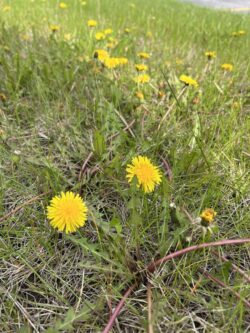
Moving Away from Pesticides

How can I move away from pesticide use on my lawn? Check out the Good Neighbor Iowa website. You will find helpful information such as a natural lawn care calendar that has tips like these for April:
· Apply corn gluten, a natural herbicide, to prevent weed seeds from germinating
· Fill in bare spots with a 50/50 mix of compost and soil, before you add grass seed
· Apply compost tea Another helpful website is Midwest Grows Green which is based out of Madison, Wisconsin.
You can purchase inexpensive yard signs indicating your choice to be pesticide free, such as these at Good Neighbor Iowa.
Focus on Water
Did you know that your city may offer you up to $1500 in a grant match for initiatives at your residence that reduce stormwater run-off? Possible examples are rain barrels, soil restoration, rain gardens, native landscaping, permeable pavement, and downspout redirecting. This initiative is called The Rain Campaign, and you can get more information at raincampaign.org Once you are on the website, scroll down and you will see that twelve metro Des Moines cities participate, in addition to the Polk County Soil and Water Conservation District.